


Listen To This Post
Punjab has reduced industrial electricity tariffs to ₹5.81 per unit, the lowest in the country. This gives Punjab a clear competitive edge over major industrial states.

Written By: AS MITTAL | THE NEWS DOSE.COM
New Delhi/Chandigarh, Updated At: 8.25 AM MARCH 11,2026 IST
Industrial competitiveness depends not only on incentives but also on operating costs, especially power tariffs, which often determine manufacturing viability. Recognising this, Punjab has reduced industrial electricity tariffs to ₹5.81 per unit, the lowest in the country. This gives Punjab a clear competitive edge over major industrial states such as Tamil Nadu (₹9.04/unit), Gujarat (₹8.98/unit), Maharashtra (₹8.32/unit), Karnataka (₹7.75/unit), Haryana (₹6.95/unit), UP(₹ 6.75) and Rajasthan (6.50/unit),where power costs are much higher.
This tariff reduction and related reforms show how political will, administrative intent and efficient execution can transform public sector institutions. In less than a year, the turnaround of Punjab State Power Corporation Ltd (PSPCL) from a loss-making utility to a profit-making entity with ₹2,634 crore profit and an A+ rating is a clear example of how governance reforms can directly support industrial growth.
Alongside this competitive power tariff regime, Punjab’s new Industrial & Business Development Policy 2026 reflects the reform-oriented vision of Chief Minister Bhagwant Mann and the proactiveness of Industries and Power Minister Sanjeev Arora. An industrialist himself, Arora engaged closely with power reform initiatives and industry stakeholders across the state to gather sector-specific feedback and incorporate practical suggestions into the policy. This consultation has shaped power tariff rationalisation and an industrial policy that aligns with the needs of competitive, modern manufacturing, signalling a clear shift in Punjab’s approach to industrial development.
Reviving Punjab’s Manufacturing Legacy
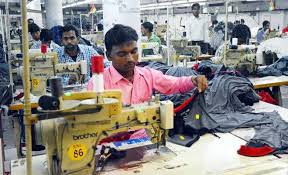
Punjab’s industrial strength has historically rested on its vibrant MSME-driven manufacturing ecosystem of more than two lakh units. Cities such as Ludhiana, Jalandhar, Amritsar, Hoshiarpur, Batala, Mandi Gobindgarh and Mohali have evolved into major industrial hubs, producing bicycles, textiles and hosiery, sports goods, machine tools, auto components, and agricultural equipment.
For decades, these clusters served domestic markets and exported globally, generating employment and prosperity across the state. However, over the past two decades, Punjab lost part of its industrial edge as industries shifted to states with lower land costs, stronger incentives, simpler compliance systems and better infrastructure.
The new industrial policy aims to reverse this trend by creating a more competitive and investor-friendly ecosystem that encourages new investment and reinvestment by existing industries.
The policy identifies nine priority sectors—food processing, sports goods, textiles and allied industries, agro-waste processing, auto and auto components, electronics and semiconductors, IT, electric vehicles, and defence and aerospace. These sectors will receive an additional 25 per cent incentive, as will industries located in border districts such as Pathankot, Gurdaspur, Amritsar, Tarn Taran, Ferozepur and Fazilka, as well as the Kandi region.
A Flexible Incentive Framework
A key innovation of the industrial policy is its investor-driven incentive architecture. For the first time, investors can select from 20 incentive options and customise packages based on their sector, scale and operational cost structure.
This approach acknowledges a key reality of modern industry: different sectors require different types of support. A pharmaceutical plant, an electric vehicle manufacturer, a textile unit, or a data centre operates under very different cost structures and investment cycles.
The policy also introduces a capital subsidy in Punjab, allowing the government to share part of the upfront investment burden and reduce financial risk for investors. Combined with incentives that can reach up to 100 per cent of Fixed Capital Investment, this framework improves the financial viability of large projects.
Long-Term Policy Stability
Another important reform is the continuation of exemptions on SGST, stamp duty, electricity duty, and the employment generation subsidy, which were earlier available to investors.
The eligibility period for investors has been extended from 7–10 years to 10–15 years, much longer than the typical five-to-ten-year support period offered by most states.
Such long-term policy assurance is crucial for capital-intensive sectors such as semiconductors, pharmaceuticals and data centres, where investments take years to mature, and returns are realised gradually. By aligning incentives with the lifecycle of these projects, Punjab offers the policy stability and financial predictability that global investors value when choosing investment destinations.
Strengthening Existing Industry
While many industrial policies focus primarily on attracting new investors, Punjab’s policy recognises the critical role of existing industries that have sustained the state’s manufacturing base for decades.
Modernisation, machinery upgrades, capacity expansion and new production lines by existing manufacturers will now qualify for incentives, placing them on equal footing with new investors. This reform is significant for traditional industrial clusters such as Ludhiana, Jalandhar and Mandi Gobindgarh, where thousands of small and medium manufacturers are striving to upgrade technology and improve productivity.
Reducing the eligibility threshold for the Employment Generation Subsidy to an investment of ₹25 crore and 50 workers—from the earlier threshold of ₹250 crore and 1,000 employees—broadens the incentive framework for MSMEs.
Eligible firms will receive wage support of ₹3,000 per month per male employee and ₹4,000 per month for women, SC, ST and differently-abled employees. In industrial towns where firms typically employ 25–50 workers, this reform could lead to increased reinvestment and job creation.
Incentivising Sustainability and Compliance
Another progressive reform is the expanded definition of Fixed Capital Investment, which now includes investments in land, labour, housing, research and development facilities, effluent treatment plants, sewage treatment plants and Zero Liquid Discharge (ZLD) systems.
The policy also introduces capital subsidies of up to ₹10 crore for ZLD systems and ₹7.5 crore for switching to paddy-straw-based boilers. By recognising these investments within the incentive base, the policy rewards companies for building environmentally compliant and sustainable industrial infrastructure.
This provision will benefit sectors such as textile dyeing units in Ludhiana and leather tanneries in Jalandhar, which must invest heavily in pollution-control and effluent-treatment systems. By supporting compliance-driven investments, the policy promotes responsible industrial growth and strengthens environmental sustainability.
Complementing these initiatives are reforms to labour regulations, such as permitting night shifts for women, along with streamlined building approvals and measures to improve ease of doing business, all aimed at reducing procedural delays and improving investor confidence.
The Road Ahead
Punjab’s entrepreneurial culture has always been one of its greatest strengths. Together with the country’s lowest industrial power tariff, the Industrial & Business Development Policy 2026 is more than just another policy announcement; it is a strategic effort to restore Punjab’s confidence as a manufacturing powerhouse.
However, the success of this policy will depend on effective implementation and continued governance reforms. Investors judge states not only by policy announcements but also by the efficiency of approvals, the transparency of compliance systems and the reliability of infrastructure.
Backed by strong governance, digital single-window approvals within 45 days and self-certification frameworks, the policy could transform Punjab into an engine of industrial growth, exports and large-scale employment generation, securing a more prosperous economic future for the next generation.
-The author is Vice-Chairman of Sonalika ITL Group, Vice-Chairman(Cabinet minister rank)of the Punjab Economic Policy and Planning Board. Views expressed are personal.