


Listen To This Post
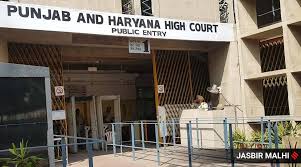
Chandigarh: In a landmark ruling that reinforces constitutional safeguards in public employment, the Punjab and Haryana High Court has directed the Haryana government to restore pay parity for Circle Superintendents, holding that creating artificial distinctions within a single cadre is unconstitutional and untenable, diluted by administrative classifications lacking an objective basis.
The Dispute: One Cadre, Unequal Treatment
The case—Bhuvnesh Kumar & Others vs State of Haryana—arose from a 2018 government order that denied Circle Superintendents the higher grade pay granted to their counterparts posted in select “premier” offices such as the Civil Secretariat, Haryana Vidhan Sabha, Governor’s House, HPSC and Legal Remembrancer.
The petitioners argued that, since 1982, all Superintendents had been treated as a single, homogeneous Group ‘B’ gazetted cadre, with identical duties, responsibilities, and transferable postings. The State’s decision to carve out a privileged subset within the same cadre, they contended, violated long-standing parity without any rational justification.
‘Intra-Cadre Discrimination’ Unconstitutional
Appearing for the petitioners, advocates Raman B. Garg, Mayank Garg and Komal Praveen argued that the State’s move amounted to intra-cadre discrimination, as there was no substantive difference in work or responsibility to justify higher pay for a select few.
The Bench of Justice Sandeep Moudgil found merit in these submissions and held the State’s action constitutionally unsustainable. The Court noted that pay parity had existed for decades—from 1986 to 2009—and no material change in duties or administrative structure justified any departure from that position.
Crucially, the State failed to provide any “clear, cogent and rational justification” for granting higher pay to a small segment of Superintendents merely because they were posted in so-called “sensitive” or “premier” departments. The Court emphasised that when posts are transferable and duties comparable, such classification becomes inherently arbitrary.
Terming the move “hostile discrimination,” the Court held it violated Articles 14 and 16, which guarantee equality before the law and equal opportunity in public employment.
‘Partial Correction’ Not Enough
The State had relied on the Pay Anomaly Committee’s recommendation of a marginal increase to ₹4600. However, the Court rejected this as a “partial correction”, observing that it failed to cure the core constitutional defect.
The judgment makes it clear that incremental financial adjustments cannot legitimise an inherently discriminatory framework, especially when the classification itself lacks a rational basis.
Directions: Full Parity with Arrears and Accountability
Quashing the impugned order dated October 15, 2018, the Court issued clear directions:
- Grant grade pay of ₹4800 initially and ₹5400 after four years
- Apply the benefit retrospectively from July 2, 2009
- Release all arrears of pay and pension within four months
- Impose 6% annual interest on arrears, rising to 12% in case of delay
A Broader Message on Service Equality
Beyond the immediate relief, the ruling sends a strong message to the State. Once employees are recognised as part of a unified cadre, any deviation in pay must be supported by objective, defensible criteria.
As the Court observed, “Once similarly situated employees are identified, placing one group in a lower pay scale without justification cannot be sustained.”
With this, the High Court has not only corrected a long-standing anomaly but also reaffirmed the constitutional principle that equality in designation must translate into equality in remuneration.