




Listen To This Post
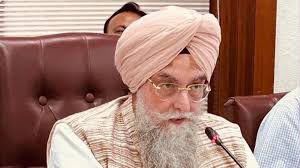
Amritsar: In a significant development that brings religious authority into direct engagement with legislative action, the officiating Jathedar of the Akal Takht, Kuldip Singh Gargaj, has summoned the Punjab Assembly Speaker, Kultar Singh Sandhwan, to appear on May 8 at the Akal Takht secretariat in Amritsar. Sandhwan has been asked to explain his position regarding the passage of the Jaagat Jot Sri Guru Granth Sahib Satkaar (Amendment) Act, 2026, which has triggered sharp reactions from Sikh religious bodies.
The summons marks a rare instance in which the highest temporal authority of the Sikh faith has sought accountability from a constitutional office-bearer, underscoring the sensitivity and gravity of the sacrilege issue in Punjab’s socio-religious landscape.
Core Objection: ‘No Consultation with the Panth’
Jathedar Gargaj alleged that the Aam Aadmi Party-led Punjab government went ahead with the legislation despite clear demands from Panthic bodies to refer the draft to the Shiromani Gurdwara Parbandhak Committee for consultation.
Referring to an April 6 resolution passed at a gathering of Sikh organisations, he said that any law concerning the sanctity of the Guru Granth Sahib must be framed with collective religious consensus. However, the Bill was passed in the Assembly on April 13 without such deliberation.
“The Akal Takht supports strict punishment for sacrilege, but bypassing the Panth in such matters is unacceptable,” the Jathedar asserted, emphasising that process and consultation are as crucial as intent.
From Religious Code to Penal Law: A Point of Contention
The controversy also stems from the nature of the amendment itself. Traditionally, the law governing the Guru Granth Sahib focused on printing, publication and distribution, a domain exclusively overseen by the SGPC.
Sikh bodies had argued that, instead of amending this framework, the government should have introduced a separate, dedicated law specifically addressing the shift to include stringent penal provisions—including severe punishments—without consensus, raising both legal and theological concerns.
Unresolved Sacrilege Cases
The summons also draws from a broader context of long-pending sacrilege cases, which have remained a politically and emotionally charged issue in Punjab for years. Gargaj referred to an earlier warning issued on January 5, indicating that Sandhwan could be called upon for failing to fulfil assurances regarding justice in such cases.
The Akal Takht secretariat noted that earlier protests at Bargari were withdrawn following assurances from Sandhwan, adding another layer of accountability to the current summons.
Beyond the Law: A Larger Institutional Question
The development underscores a deeper institutional question—the intersection of religious authority and legislative power in Punjab. While the state government seeks to strengthen legal deterrence against sacrilege, Sikh religious institutions are asserting their role as custodians of faith, demanding participation in decisions affecting core religious matters. With Sandhwan now set to appear before the Akal Takht, the episode is likely to shape not just the future of the law but also the evolving relationship between Punjab’s political leadership and its religious institutions.