




Listen To This Post
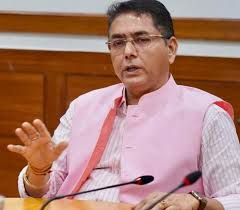
CHANDIGARH: In a major development in the controversial gangster Lawrence Bishnoi jail interview case, a retired judge of the Punjab and Haryana High Court has exonerated IPS officer Vivek Sheel Soni, the then Senior Superintendent of Police (SSP) of Mohali, of allegations relating to misconduct, negligence and dereliction of duty during the period when the gangster’s interviews were allegedly conducted from police custody at CIA Kharar.
The issue resurfaced politically on Wednesday, after Bikram Singh Majithia publicly questioned the exoneration and accused the Punjab government of shielding officials linked to a serious breach of security protocols and custodial practices.
Inquiry Report: ‘No Evidence of Connivance or Prior Knowledge’
Justice Rajiv Narain Raina, who was appointed as Inquiry Officer on the directions of the Punjab and Haryana High Court, submitted his report on December 31, 2025. The report reportedly concluded that although a “serious breach of custody safeguards” had undeniably taken place at CIA Kharar on the intervening night of March 14, 2023, there was no evidence to establish that SSP Vivek Sheel Soni had prior knowledge, connivance, or wilfully ignored the incident.
Justice Raina observed that it would be “unsafe” to hold the district police chief responsible solely because he occupied the post of SSP at the time. The report also flagged procedural irregularities in the disciplinary proceedings initiated against Soni, including alleged non-supply of documents, inadequate response time, and lack of clarity regarding the legal basis for the action initiated against him.
The findings effectively recommend that all disciplinary proceedings against Soni be dropped.
How the Controversy Began
The controversy erupted after two interviews with gangster Lawrence Bishnoi were telecast by a private news channel on March 14 and March 17, 2023. The Punjab and Haryana High Court subsequently took suo motu cognisance of the matter through a public interest litigation, terming the incident a serious lapse in prison and police administration.
Two FIRs were registered at the State Crime Police Station in SAS Nagar, and a Special Investigation Team (SIT) was constituted to probe the matter.
The SIT later concluded that the first interview, aired on March 14, was conducted while Bishnoi was in Punjab Police custody at CIA Kharar. In contrast, the second interview, aired on March 17, was recorded from a jail in Rajasthan.
DSP Gursher Singh Under Scanner
While exonerating Soni, the inquiry report and earlier SIT findings had pointed towards the alleged role of DSP Gursher Singh. According to the SIT, the DSP had allegedly facilitated the interview by being present and conniving at CIA Kharar.
The probe also uncovered allegations of disproportionate assets against him, leading to the registration of a corruption case under the Prevention of Corruption Act against Gursher Singh and his mother in June 2025.
The Punjab government had earlier suspended seven police officers, including two DSPs, and initiated disciplinary action against nine officers, among them Vivek Sheel Soni.
Political Reactions and Renewed Questions
The exoneration has triggered fresh political controversy. Shiromani Akali Dal leader Bikram Majithia questioned whether the Punjab government, headed by Bhagwant Mann, was attempting to protect officials linked to the embarrassing episode.
Majithia also invoked the emotional backdrop of the murder of Punjabi singer Sidhu Moosewala, alleging that the development would deepen public anguish over how gangsters continued to wield influence even from custody.
The Home Department, however, has so far remained silent on the issue.
A Case That Exposed Institutional Vulnerabilities
Beyond individual accountability, the Lawrence Bishnoi interview episode exposed serious vulnerabilities in Punjab’s custodial security system. It raised troubling questions about the nexus between organised crime, prison administration and sections of law enforcement.
While the inquiry report appears to have cleared the then SSP of direct responsibility, the broader concerns surrounding how a jailed gangster managed to give televised interviews from custody continue to cast a long shadow over the state’s policing and prison mechanisms.