






Listen To This Post
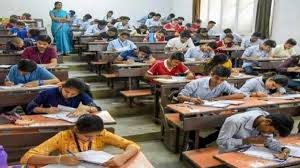
New Delhi: A startling picture of India’s school education system has emerged from a new report released by NITI Aayog, which found that nearly 7,993 schools across the country are functioning without a single student enrolled. The report raises serious concerns about gaps between official records and ground realities, while also highlighting persistent shortages of teachers, inadequate infrastructure, and uneven access to quality education.
Titled “School Education System in India: Temporal Analysis and Policy Roadmap for Quality Enhancement”, the study is based on UDISE+ 2024-25 data and presents a comprehensive assessment of the country’s education landscape.
Among the States, West Bengal recorded one of the highest numbers of zero-enrolment schools, with 3,812 such institutions. Telangana reported an even larger figure of 12,245 schools with no students, underlining the scale of the challenge in maintaining viable educational institutions. In comparison, Punjab reported 13 such schools, while Jammu and Kashmir had 146.
The report observed that although these schools remain in administrative records and receive government funding, many are effectively non-functional. According to NITI Aayog, the continued allocation of funds and workforce to schools without students reflects a serious disconnect between planning processes and realities on the ground. Experts believe this could lead to inefficient use of public resources at a time when the education sector urgently requires targeted investment.
Teacher shortage remains a major crisis.
The report also flags an alarming shortage of teachers, especially in rural, remote, and tribal regions. More than one lakh schools across India are currently operating with only a single teacher, accounting for over 7 per cent of all schools in the country.
States such as Jharkhand, Maharashtra and Dadra and Nagar Haveli and Daman and Diu were found to have pupil-teacher ratios significantly higher than the national average. Such imbalances often force teachers to handle multiple classes simultaneously, reducing individual attention to students and adversely affecting learning outcomes.
The staffing crisis is particularly severe in Bihar, which alone accounts for more than 2.08 lakh vacancies at the elementary level. The State also reported 36,035 vacancies at the secondary level and 33,035 at the senior secondary stage. Significant shortages were also reported in Haryana, Karnataka, and Maharashtra.
The report further pointed out that most States still lack structured career progression systems for teachers. Unlike many advanced education systems globally, Indian teachers often have limited opportunities to grow into roles such as mentor teachers, master trainers, or academic leaders. This absence of professional advancement pathways affects motivation, retention, and long-term quality improvement in schools.
Infrastructure gaps continue despite progress.
While India has made noticeable improvements in school infrastructure over the last decade, critical deficiencies remain. The share of schools with functional toilets increased from 85.17 per cent in 2014 to nearly 94 per cent in 2024-25. However, the report noted that more than 98,592 schools still lack functional toilets for girls.
Additionally, over 61,540 schools lack usable toilet facilities altogether. Education experts warn that such shortcomings disproportionately affect girls’ education, especially in rural areas, where poor sanitation often becomes a reason for absenteeism and eventual dropouts. Inadequate hygiene infrastructure also poses health and dignity concerns for students.
The fragmented schooling system is increasing the risk of dropout
India currently has over 14.71 lakh schools catering to nearly 24.69 crore students, making it one of the world’s largest education systems. However, the report highlighted a structural imbalance within the system.
Nearly half of all schools in the country provide education only up to the primary level, covering Classes 1 to 5. In contrast, only 5.4 per cent of schools offer uninterrupted education from Class 1 to 12.
This fragmented structure often forces students, especially those from rural and economically weaker backgrounds, to change schools multiple times during their academic journey. Such transitions frequently contribute to higher dropout rates, particularly among girls and marginalised communities.
Call for urgent reforms
The NITI Aayog report underlines the urgent need to rationalise schools, improve teacher recruitment, enhance infrastructure, and strengthen data management systems. It also stresses that educational reforms must move beyond enrolment figures and focus more deeply on learning quality, institutional efficiency, and equitable access.
Educationists believe that unless these structural deficiencies are addressed through coordinated policy action, India’s demographic advantage could weaken in the coming decades. The findings serve as a reminder that expanding access alone is not enough; ensuring quality, accountability, and functionality within schools remains equally critical for the country’s future.