





Listen To This Post
The ruling NDA secured 298 votes, while the Opposition INDIA bloc mustered 230 votes.
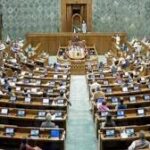
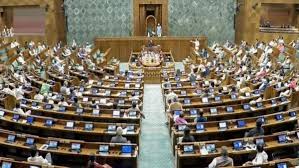
New Delhi: In a major political setback, the Constitution (131st Amendment) Bill aimed at operationalising women’s reservation in the Lok Sabha failed to secure passage in the House on Friday, falling short of the required two-thirds majority despite an intense and high-stakes debate.
The ruling NDA secured 298 votes, while the Opposition INDIA bloc mustered 230 votes. However, with the total strength considered for voting, the government needed at least 352 votes to pass the constitutional amendment—leaving it well below the threshold. Following the defeat, the government also withdrew the two accompanying legislations—the Delimitation Bill and the Union Territories Laws (Amendment) Bill.
High-pitched debate and political polarisation
The debate preceding the vote witnessed sharp exchanges between the Treasury benches and the Opposition, with both sides framing the Bill as a defining political moment. Prime Minister Narendra Modi made an emotional appeal to Members of Parliament, urging them “not to deprive Nari Shakti of new opportunities” and to support what he described as a transformative step toward inclusive governance.
On the other hand, Leader of Opposition Rahul Gandhi criticised the Bill, alleging that it was being used as a tool to “reshape the electoral map of India” through the proposed delimitation exercise linked to the legislation.
Amit Shah defends Bill, targets Opposition
Union Home Minister Amit Shah mounted a strong defence of the Bill, asserting that its primary objective was to ensure the implementation of women’s reservation by the 2029 Lok Sabha elections. He rejected allegations that the move was intended to delay caste enumeration or manipulate electoral boundaries.
Shah also accused the Opposition of obstructing women’s empowerment, stating that those opposing the Bill were effectively standing in the way of increased representation for women as well as Scheduled Castes and Scheduled Tribes. He even indicated that the government was open to an official amendment ensuring a 50% increase in Lok Sabha seats across states, provided there was broader consensus.
Setback with wider political implications
The failure of the Bill underscores the deep divisions between the government and the Opposition on issues of delimitation, representation, and electoral balance. While both sides claim to support women’s reservation in principle, disagreements over the mechanism—particularly linking it with seat redistribution—proved decisive.
With the Bill failing to pass, the timeline for implementing women’s reservation in Parliament now remains uncertain, and the issue is likely to remain a central point of political contestation in the run-up to future elections.