







Listen To This Post
The initiative focuses on open dialogue, awareness, and trust-building, while complementing the ongoing anti-gangster drive ‘Gangstran Te Vaar’
Chandigarh: In a significant shift towards preventive policing, the Punjab Police launched as part of a broader community policing strategy. The initiative focuses on open dialogue, awareness, and trust-building, while complementing the ongoing anti-gangster drive ‘Gangstran Te Vaar’. Over the past three months alone, more than 2,800 programmes have been conducted across all 28 districts, reaching thousands of students, families, and community leaders.
At the heart of the campaign lies a simple but impactful approach—taking policing beyond enforcement and into conversation. Through village meetings, school seminars, and city-level interactions, police officers are directly engaging with young people to expose the reality behind the “dark world” of gangs. Inputs gathered during these sessions have revealed a consistent pattern: criminal networks lure youth with promises of quick money, luxury lifestyles, and opportunities abroad, only to leave them to face legal consequences while the masterminds remain distant and untouched.
Director General of Police Gaurav Yadav said these interactions are helping young minds see through such traps early. “Youngsters have immense potential, but they can be misled easily. Those running these networks stay removed, while the recruits pay the price. Youth must recognise these dangers before it is too late,” he said, underlining the importance of early awareness as a deterrent.
The impact is increasingly visible on the ground. Students attending these sessions describe them as eye-opening, with many acknowledging how gangs exploit vulnerability and ambition. Kanwaljeet Kaur, a participant in one such programme, said the discussions made her realise how easily youth can be manipulated. “In the end, it is the individual who risks everything. These sessions should continue, and we as students can also spread awareness,” she noted, reflecting a growing sense of shared responsibility.
The initiative has also strengthened community confidence in policing, making it easier for residents to approach officials, share concerns, and contribute information. In border districts like Fazilka, where vulnerability to cross-border networks is higher, targeted awareness programmes are being conducted to sensitise youth against drug smugglers and criminal syndicates. Officials have been cautioning them against falling for illusions of glamour and easy success, while encouraging vigilance and responsible decision-making.
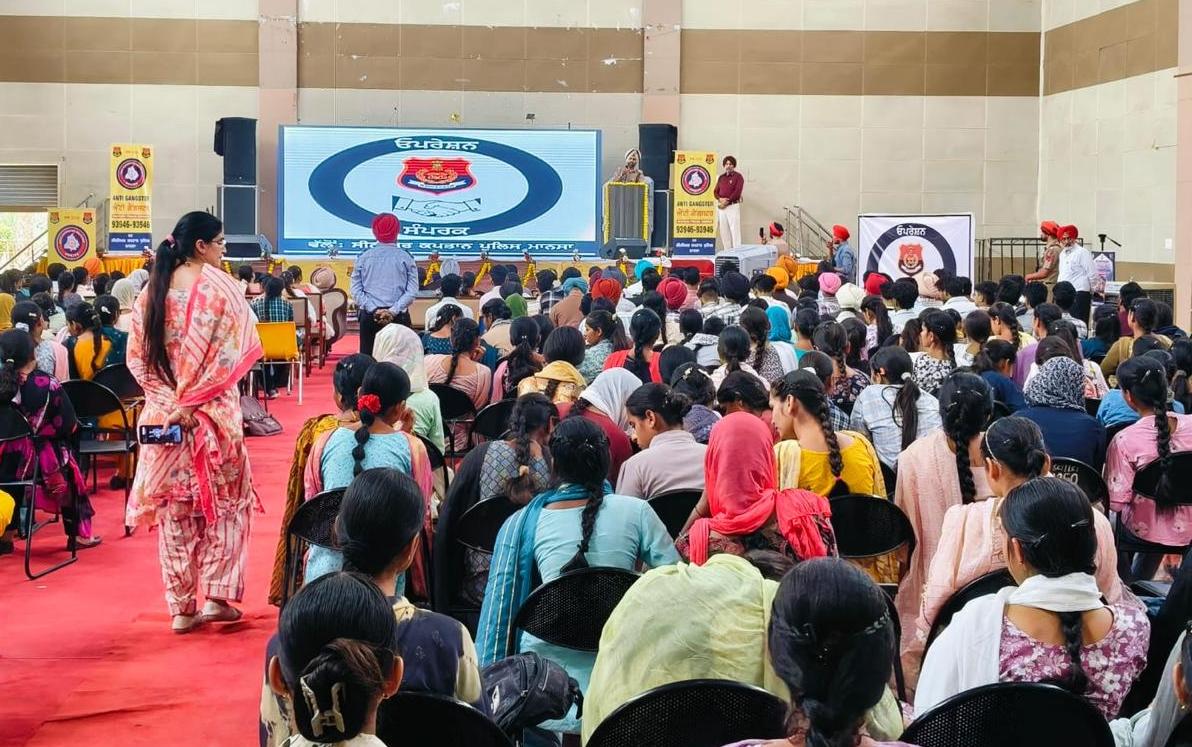
Recent outreach efforts underline the scale and seriousness of the campaign. In Mansa, a large awareness session at Guru Nanak College, Budhlada, saw participation from nearly 1,500 students and staff, addressed by senior officers. Similar programmes in villages such as Karni Khera have brought together students, teachers, sarpanches and residents, creating a collective front against crime at the community level.
The police have also promoted the Anti-Gangster helpline (93946-93946) and informed citizens about the state’s reward policy for credible information, assuring confidentiality and incentives. This has encouraged greater public participation, transforming passive awareness into active cooperation.
Officials maintain that ‘Sampark Abhiyan’ is not just a campaign but a long-term shift in policing philosophy—from reactive action to proactive prevention. By fostering trust, encouraging dialogue, and equipping youth with awareness, the initiative is gradually building a social firewall against crime. As participation grows and communities become more vigilant, the programme is steadily moving towards its larger goal: a safer, more resilient Punjab driven by informed and empowered citizens.